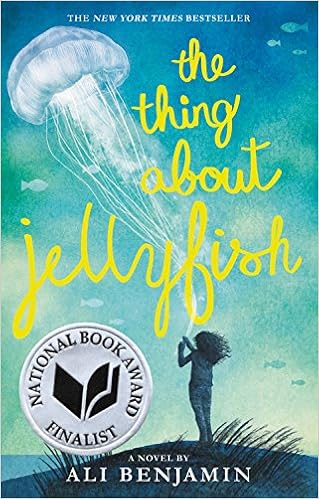
So far, I have noticed how Benjamin utilizes descriptive language throughout the text. The images she creates with the detail she uses gives a true sense of how Suzy, the main character, feels throughout each chapter. Using strong diction like "grotesque" gives the reader a picture of who or what is being described.
I have also noticed the running metaphor that Benjamin creates of Suzy being the jellyfish. Reading as a writer, I think think this is a great way to keep the interest of the audience, and it also creates a feeling of anticipation for the reader. Since I have not gotten very far within the book, I am still waiting to find out why Suzy continues to compare herself to the jellyfish.
The use of flashbacks fills the audience in on important details of the story that happened prior to the present day of the novel. I appreciated this because this gave me a better understanding of the events that led up to the conflict Suzy faces throughout the story. In other novels I have read, the use of flashbacks threw me off, but with The Thing About Jellyfish, I am glad the author incorporated the detail.
As Dr. Kingsley mentioned in her own blog post about Benjamin's novel, the author clearly did an extensive amount of research about jellyfish to be able to tell this story. Without this research, the novel would be lacking a large portion of its focus.
With this novel, I could teach a mini-lesson on using leads in a narrative. Each of the chapters I have read so far does an excellent job of "hooking" the reader. One opening of text I would use in particular would be:
"During the first three weeks of seventh grade, I'd learned one thing above all else: a person can become invisible by simply staying quiet."
This section of text is the opening of the first chapter in the whole book. Instantly, the reader's attention is grabbed, leaving them wanting to read more. For a mini-lesson, I would take this quote, or others like it, and have the students practice "hooking" their audience. With this, they could practice introducing the main idea of their narrative, without giving the reader too little or too much information.
This novel would be a great mentor text because of the way that the author can leave the reader wanting to read more. I cannot wait to continue reading to find out what happens with Suzy and the jellyfish.